
5 Furniture Orders Worth Previewing Before Delivery Day
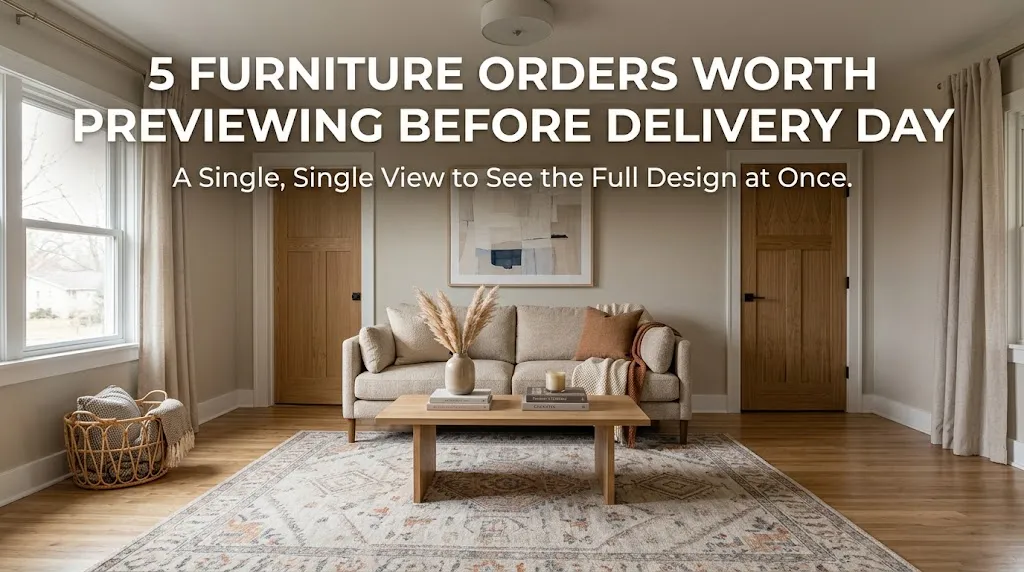
For anyone who ships or receives furniture as part of an online order, delivery day is where the whole logistics chain either wins or loses. The courier tracks the package, the driver arrives on time, the box is intact — and then the customer opens it, and something is wrong. Not with the product. With how it fits the room.
Furniture returns are especially expensive because they require bulky reverse logistics, inspection, pickup scheduling, and often a long wait for a replacement. Visual mismatch is one common trigger — alongside wrong dimensions, quality issues, and delivery constraints — and it is one of the most preventable: buyers commit without being able to see the piece in their own space before ordering. They see a studio-lit product photo, imagine it in their living room, and commit. When the sofa arrives and it turns out to be six inches too wide for the wall it was meant to sit against, the courier who worked hardest on the delivery gets to work equally hard on the pickup.
Before checkout, buyers can upload a room photo to Room Design GPT and test how different furniture choices would look in terms of layout, style, colour, and visual weight — before committing to a bulky order. The AI generates a realistic room preview in about 60 seconds, with a free-to-try flow and no design software skills required. Many of the fit questions below are easier to answer with a preview than without one. Here are five bulky or fit-sensitive categories where running a quick check before checkout is worth the 60 seconds.
1. Three-Seater Sofas
Sofas are one of the riskiest online furniture purchases because size, colour, depth, and traffic flow are hard to judge from studio photos. The listing shows the sofa against a neutral wall with no context. The room it ends up in has a doorframe, a coffee table, a rug, and a wall socket the sofa now half-covers. The scale problem is almost never obvious in the listing — it becomes obvious the second the piece is set down.
The preview catches this because scale problems that looked fine in a studio photo often become obvious the moment the piece is placed in your actual room’s context. The sofa that seemed proportionate against a blank wall reads very differently against a doorframe, an existing rug, and the real dimensions of your living space.
2. Dining Tables
Common pre-purchase checks for dining tables include length — a 6-seater can look compact in a showroom and dominant in an apartment dining nook — and visual weight against existing chairs. Most listings do not communicate how a table will read in a real dining area, which is where buyers are often surprised after delivery.
Preview the table in the actual dining area before ordering, and a table that seemed compact in listing photos often reads as dominant once placed in your actual nook. Length, fit, and visual weight are far easier to judge when the piece is shown in your real space rather than a showroom. This is one of the most useful previews you can run.
3. Wardrobes and Storage Units
Wardrobe returns can often come down to a door-clearance problem. The wardrobe fits along the wall, but the door swings into a bed corner or blocks a window. Or it’s the wrong depth for a room with a ceiling fan hanging low on that wall.
The preview places the wardrobe in your actual room context. If the piece is going to dominate the wall, crowd the window, or leave no breathing room on the sides, the visual makes that clear before the courier fights the box up three floors.
4. Beds and Bed Frames
A common concern with beds is walking space. A queen bed can fit a room mathematically while still leaving awkward clearance once wardrobes, side tables, and doors are taken into account. The listing photo does not show the doorway, the built-in wardrobe, or the balcony access that the bed may now crowd.
A rendered preview of the bed in the room, viewed from the doorway, tells you in seconds whether the bed is going to visually overwhelm the space — or whether the proportions still leave room to breathe.
5. Rugs
Rugs seem harmless — they roll up, they ship cheap, they should be low return risk. In practice they aren’t, because rug size is one of the most commonly misjudged dimensions in online furniture buying. A 6×9 rug on a Pinterest board looks generous. In an actual room, the sofa’s front legs may or may not sit on it, and the tonal contrast between rug and floor changes completely under actual home lighting.
The preview renders the rug in the context of your actual room and floor colour. If the rug is going to look postage-stamp under the sofa, or if the tone is going to fight the floor, you see it before it ships.
What Room Design GPT Actually Does Well
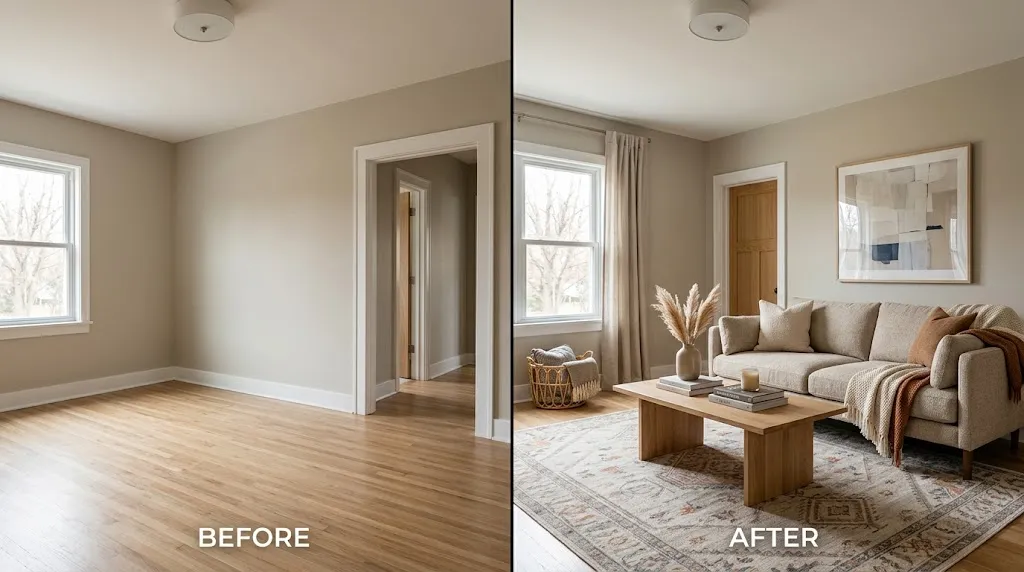
Room Design GPT is not a measuring tape. It will not tell you to the centimetre whether a sofa fits a wall. What it does — and does genuinely well — is take a photo of your actual room and show you what it could look like with different furniture, styles, and colours.
Upload a room photo, and the tool preserves your walls, windows, doors, and rough furniture layout while replacing style, colour, and furniture with AI-generated alternatives. The render shows how a dark walnut table reads against your specific floor, how an L-shaped sofa fills your actual corner, how a rug tone sits under your home lighting rather than a studio light. Tones that looked warm in a product shot often read differently under the ambient light your room photo captures.
The output is a visual judgement, not a floor plan. But for most of the return scenarios above, visual judgement is exactly what was missing. The buyer who returns a sofa because “it looked wrong” did not need a blueprint — they needed to see the piece in the room first. Room Design GPT delivers that in about 60 seconds, from a phone photo, with a free-to-try flow and no design software skills required.
Why This Matters for Both Sides of the Transaction
For buyers, the preview reduces guesswork before a bulky order is placed — moving a decision that would otherwise only be made on delivery day to a point where the order can still be changed without a return pickup.
For sellers and the couriers who service them, fewer avoidable mismatches could mean fewer pickup conversations, fewer repackaging jobs, and fewer exchanges scheduled at the last minute. Every furniture return is a courier trip that could potentially have been redirected at the “add to cart” stage. A room preview before checkout is a small step that puts the decision at the moment it costs the least.
The tracking number is what the buyer watches after they order. The room preview is what helps before they order — when delivery day is still a planned success rather than the start of a return request.