Ink with Precision: Using a Gothic Font Generator to Design Your Perfect Calligraphy Tattoo Stencil
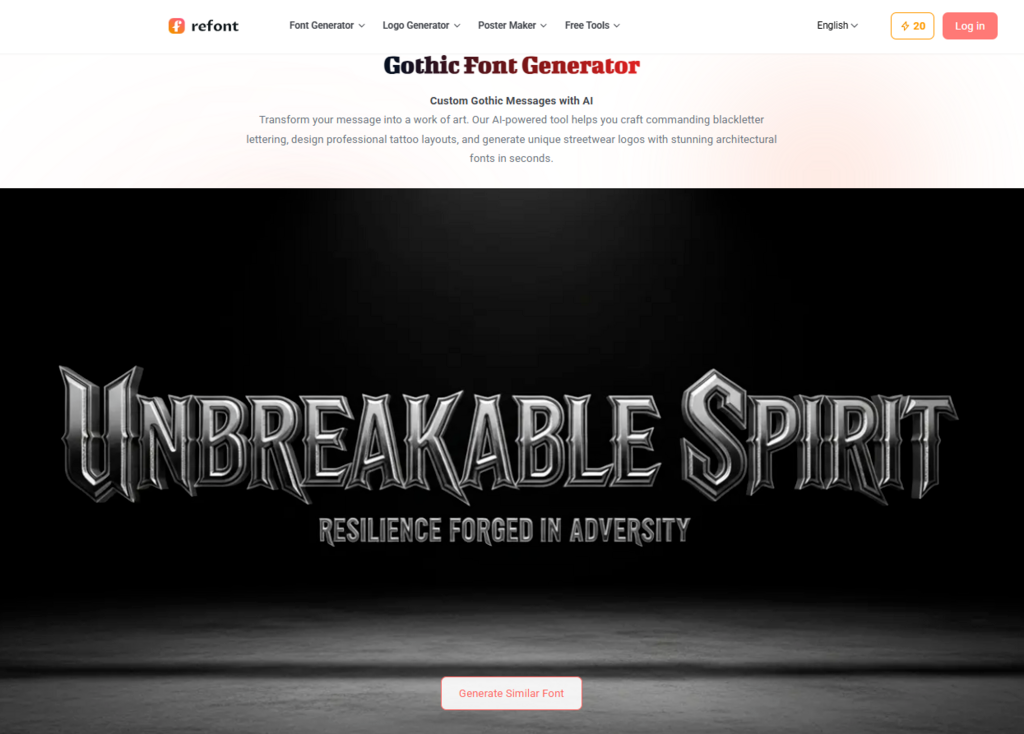
Tattooing is an ancient art form that has evolved into a sophisticated medium of personal expression. Among the most enduring styles in the industry is Gothic calligraphy. Whether it is a sprawling back piece or a delicate wrist script, Gothic lettering—often referred to as Blackletter—conveys a sense of history, strength, and rebellion. However, for both the enthusiast and the professional artist, the transition from a mental concept to a physical stencil is fraught with challenges. The margin for error in permanent ink is zero. This is why more creators are turning to a specialized gothic font generator to bridge the gap between imagination and the needle.
For the person getting tattooed, the biggest fear is often the “sketch anxiety.” You have a vision of a specific Old English or Modern Gothic style, but describing that to an artist can be difficult. On the other side, tattoo artists face the pressure of drafting complex, symmetrical calligraphy that meets a client’s exact expectations while managing a busy studio schedule. By utilizing digital tools, both parties can achieve a level of precision that ensures the final result is nothing short of a masterpiece.
The Anatomy of Gothic Scripts in Tattoo Art
Gothic lettering is not a singular style; it is a family of scripts with distinct personalities. Understanding these nuances is essential before you sit in the chair. When you use a gothic font generator, you aren’t just looking for “fancy letters”—you are looking for the right historical and aesthetic “weight.”
1. Old English and Textura
This is the most traditional form of Gothic script. Characterized by dense, vertical strokes and sharp, angular terminals, it is the go-to for those seeking a “medieval” or “heritage” feel. It works exceptionally well for surnames or meaningful dates.
2. Fraktur and Schwabacher
These styles introduce more curves and broken lines. They offer a slightly more “organic” feel compared to the rigid structure of Old English, making them popular for larger compositions where the text needs to flow with the natural contours of the body.
3. Modern Gothic and Neo-Tribal
In recent years, a “Modern Gothic” movement has emerged. This style strips away some of the intricate flourishes of the 15th century in favor of cleaner lines and high-contrast thickness. It is highly legible and translates beautifully into “fine-line” tattooing.
Using a high-quality gothic font generator allows you to toggle between these sub-styles instantly. This immediate visual feedback helps a client decide if they want the aggressive, sharp edges of a traditional script or the sleek, minimalist look of a contemporary one.
Solving the “Lost in Translation” Problem Between Artist and Client
The most common pain point in the tattoo process is the discrepancy between what a client wants and what the artist draws. A client might say they want “Gothic,” but in their head, they are thinking of a specific Chicano-style script, while the artist interprets it as classic Blackletter.
By bringing a pre-generated stencil to the consultation, the client provides a concrete visual anchor. A professional gothic font generator allows the user to input their specific text—perhaps a name, a quote, or a single powerful word—and see exactly how the letters interact. This “proof of concept” saves hours of back-and-forth sketching.
Furthermore, modern AI-driven platforms have evolved beyond simple text. The integration of “Pattern + Text” functionality means that users can now see how their chosen Gothic lettering looks when integrated with decorative elements or geometric patterns. This holistic approach ensures that the typography doesn’t look like an afterthought but rather a core component of the tattoo design.
Why Professional Tattoo Artists Love Digital Stencils
While traditionalists might swear by hand-drawing, the modern tattoo industry values efficiency and anatomical accuracy. Professional artists use a gothic font generator as a foundational tool for several reasons:
- Perfect Kerning and Alignment: Maintaining consistent spacing between complex Gothic letters by hand is incredibly difficult. Digital tools provide a perfect baseline.
- Scalability: An artist can take a generated design and scale it to fit a specific muscle group without losing the sharpness of the lines.
- Customization: Digital outputs can be used as a “base layer” which the artist then embellishes with custom shading, “blood drops,” or “cracked” effects, combining the speed of AI with the soul of hand-craftsmanship.
Step-by-Step: Creating Your Custom Tattoo Stencil
If you are planning your next piece of ink, follow this workflow to ensure your typography is flawless:
Step 1: Define the Placement
Where the tattoo goes dictates the font choice. A large, bold Gothic script is perfect for a chest piece, but a more simplified “Modern Gothic” might be better for the fingers or behind the ear to prevent the ink from “blurring” over time.
Step 2: Input and Iterate
Enter your text into the gothic font generator. Don’t settle for the first result. Experiment with the “weight” of the letters. Gothic fonts rely on the contrast between thin and thick lines; make sure the “thicks” aren’t so thick that they will bleed together as the tattoo ages.
Step 3: Check Legibility vs. Artistry
Gothic tattoos are famous for being “beautifully unreadable” in some cases. Decide where you fall on this spectrum. If the tattoo is a memorial, you likely want it to be legible. If it is purely for the “dark aesthetic,” you can afford to be more abstract.
Step 4: Export and Consult
Print your design or save it to your phone. When you meet your artist, show them the generated script. They can then advise on “skin-safe” modifications—such as widening certain gaps—to ensure the tattoo remains crisp for decades.
The Cultural Significance of the Gothic Choice
Choosing Gothic lettering for a tattoo is a statement of “Authoritativeness.” It is a nod to the scribes of the Middle Ages, the printing presses of the Renaissance, and the counter-cultures of the 20th century. It is a font style that carries “Experience” within its very DNA.
Whether you are a tattoo artist looking to streamline your workflow or a first-timer looking for the perfect script, the right technology makes all the difference. The fusion of AI and ink is not about replacing the artist; it is about empowering the individual to express their unique identity with absolute precision.
In conclusion, the days of “guessing” how your Gothic tattoo will look are over. By utilizing a high-performance gothic font generator, you can enter the studio with confidence, knowing that your design is symmetrical, stylish, and exactly what you envisioned. Your skin is a canvas—treat it with the professional precision it deserves.
Would you like me to help you generate a specific “Modern Gothic” or “Old English” layout for your next design project, or perhaps analyze which Gothic sub-style best fits your brand’s current aesthetic?