
Why Thermoforming Stays the Smart Choice for Large Plastic Parts
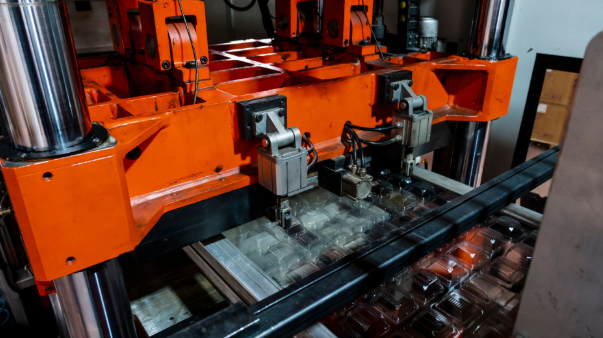
Here’s a problem every manufacturing team knows well: you need large plastic parts, your timeline is tight, and your budget has limits that aren’t moving. It’s a frustrating corner to be backed into. But thermoforming has been quietly solving exactly this problem for decades, and the reasons engineers and procurement leads keep returning to it aren’t complicated. Lower tooling spend. Faster ramp-up. Real flexibility when designs shift mid-project.
According to Machinecraft, thermoforming cuts tooling costs by 70–90% compared to injection molding and gets parts into your hands 50–75% faster. That’s not a rounding error; that’s a genuinely different financial reality for your project.
Production Advantage, Where Thermoforming Actually Earns Its Reputation
When part dimensions grow, most manufacturing processes start showing their limits. Injection molding gets expensive fast. Thermoforming, on the other hand, is built for scale.
Single-Sided Tooling: A Bigger Deal Than It Sounds
Injection molding demands two-sided steel molds. These are costly, slow to produce, and painful to modify. Thermoforming flips that equation entirely. Single-sided molds, made from aluminum, wood, or composite materials, are dramatically simpler and far cheaper to manufacture, even when you’re working with massive part footprints.
That difference compounds quickly once you factor in lead time and iteration costs.
Scale That Other Processes Genuinely Struggle With
Vehicle dashboards. Refrigerator liners. Medical equipment housings. These aren’t small-batch novelties; they’re large-format industrial components that thermoforming handles routinely. The process doesn’t flinch at size. Injection molding, by contrast, carries tooling investments that make large parts economically painful for anything short of enormous production volumes.
Teams investing in thermoforming for production applications understand something important: this isn’t a workaround or a prototyping shortcut. It’s a full-scale manufacturing strategy engineered for parts that need size, repeatability, and speed, all at once.
Bottom-Line Numbers, Tooling Costs, and Time to Market
Cost-effective thermoforming isn’t just a phrase suppliers use to win business. The data holds up.
What Tooling Actually Costs
Thermoforming molds typically run between $3,000 and $50,000. Injection molds for complex geometries? Those routinely reach $500,000 or more. Lead times reflect the same gap; thermoforming tooling is production-ready in one to six weeks, while injection mold production often stretches across several months.
If you’re launching a product in a competitive window, that six-month head start matters enormously.
Design Changes That Don’t Break the Budget
Modifying a thermoforming tool typically costs $2,000–$5,000. Making that same change to an injection mold runs $10,000–$50,000 or more. For teams still refining geometry or responding to market feedback, thermoforming’s flexibility is genuinely transformative, not just convenient.
Volume Economics, Finding Your Break-Even Point
This is where honest evaluation matters most. Volume determines everything.
When Thermoforming Clearly Wins
For production runs up to 5,000–50,000 units, thermoforming almost always wins on total project cost. Lower tooling investment means you reach profitability faster and don’t need massive order commitments just to justify the upfront spend. For mid-volume programs, that’s a significant structural advantage.
Where Injection Molding Eventually Catches Up
Push past roughly 100,000 units, and injection molding’s automation and per-part efficiency start to tip the scales. Here’s how the two processes stack up across the key variables:
| Factor | Thermoforming | Injection Molding |
| Tooling Cost | $3K–$50K | $20K–$500K+ |
| Lead Time | 1–6 weeks | 8–16 weeks |
| Ideal Volume | Up to 50K units | 100K+ units |
| Design Flexibility | High | Low |
| Large Part Handling | Excellent | Limited |
Knowing your expected volume before you commit to a process isn’t just smart, it’s essential.
Material Efficiency, Scrap, Waste, and Smarter Sheet Use
Thermoforming does generate trim scrap. That’s worth acknowledging honestly, not glossing over.
Understanding the Waste Reality
Thermoforming typically produces 15–30% material waste from trimming operations. Injection molding, with optimized runner design, can approach near-zero waste. The gap is real. But here’s what that comparison often misses: thermoforming trim scrap is largely recyclable and can be reground for reuse, softening the actual material cost impact considerably.
Smarter Nesting, Less Waste
Common sheet materials, ABS, HDPE, HIPS, and polycarbonate, all perform well in vacuum forming large parts. Advanced nesting software now allows manufacturers to optimize sheet layouts before cutting begins, reducing blank waste meaningfully. It’s not glamorous, but it adds up across a production run.
Design Flexibility, Prototyping Without the Financial Paralysis
Fast, affordable tooling means your design team can actually iterate. That sounds obvious, but it’s genuinely underappreciated in manufacturing planning conversations.
3D-Printed Molds Are Changing the Game
Hybrid approaches combining 3D-printed molds with vacuum forming have dramatically compressed prototype timelines. An EV battery cover can realistically move from a CAD file to a physical test part in days. Not weeks. Not months. Days. That kind of speed changes how you approach product development entirely.
Thick Sheet Projects Get Real Benefits Here
Heavy-gauge thermoforming projects benefit especially well from this iterative freedom. Structural enclosures and thick-sheet components can be refined across multiple cycles without the expensive rework that injection mold modifications would demand.
Frequently Asked Questions
What are the disadvantages of thermoforming?
Thermoforming is limited to thin-walled designs, can produce uneven wall thickness across large surfaces, and isn’t well-suited for parts requiring complex internal geometry or tight dimensional tolerances.
Which additive increases plastic strength while reducing cost?
Fillers like talc, calcium carbonate, and glass fibers improve stiffness and strength while lowering material costs. They also improve resin flow during processing, making them practical choices for large-format thermoformed components.
What industries commonly use thermoforming for large plastic parts?
Thermoforming is widely used in industries that need durable, lightweight, and cost-effective large components. Automotive manufacturers use it for dashboards, door panels, and interior trims. Appliance companies rely on it for refrigerator liners and machine housings, while the medical sector uses thermoformed parts for equipment enclosures and trays. Aerospace, agriculture, and consumer product manufacturers also choose thermoforming because it handles large-format parts efficiently without the high tooling costs associated with injection molding.
Where This Leaves You
Thermoforming remains one of the most dependable, cost-grounded paths to producing large plastic parts at real production scale. Lower tooling costs, compressed timelines, meaningful design flexibility, and a broad material palette make it the clear choice when injection molding’s upfront demands simply don’t align with your program economics.
The technology continues advancing too; smarter waste recovery, improved QC systems, and hybrid prototyping approaches are steadily expanding what’s achievable. If large parts and a realistic budget describe your next project, thermoforming deserves a serious seat at your evaluation table.