Reference to Video AI for E-Commerce: How Businesses Are Turning Product Images Into Video
E-commerce market is growing at a pace that continues to outpace most global markets, driven by rising smartphone penetration, expanding digital payment infrastructure, and the rapid growth of platforms like Meesho, Flipkart, and Amazon India. For the millions of sellers and small business owners operating within this ecosystem, the competition for customer attention is intensifying with every passing quarter.
Video content has emerged as the format that consistently separates high-performing product listings from average ones. Shoppers who watch a product video are significantly more likely to complete a purchase than those who view only static images — and on social platforms like Instagram and YouTube Shorts, where Indian consumers increasingly discover new products, video is the native language of commerce. Yet for most small and medium e-commerce businesses, producing product video regularly remains operationally difficult. Filming, editing, and formatting video for multiple platforms requires time and technical skills that most lean operations simply don’t have available in the course of normal business.
Reference-to-video AI addresses this production gap directly, and for Indian e-commerce businesses specifically, the application is immediate and practical.
What Reference to Video AI Does for Product Sellers
The capability is more specific and more useful for e-commerce than general AI video generation. Rather than producing video from a text description — which generates generic visual output unrelated to the actual product — reference-to-video generation uses an existing product image as the visual anchor. The AI generates motion and video treatment that is informed by and consistent with the source image, producing a video that actually shows the product rather than a generic representation of the product category.
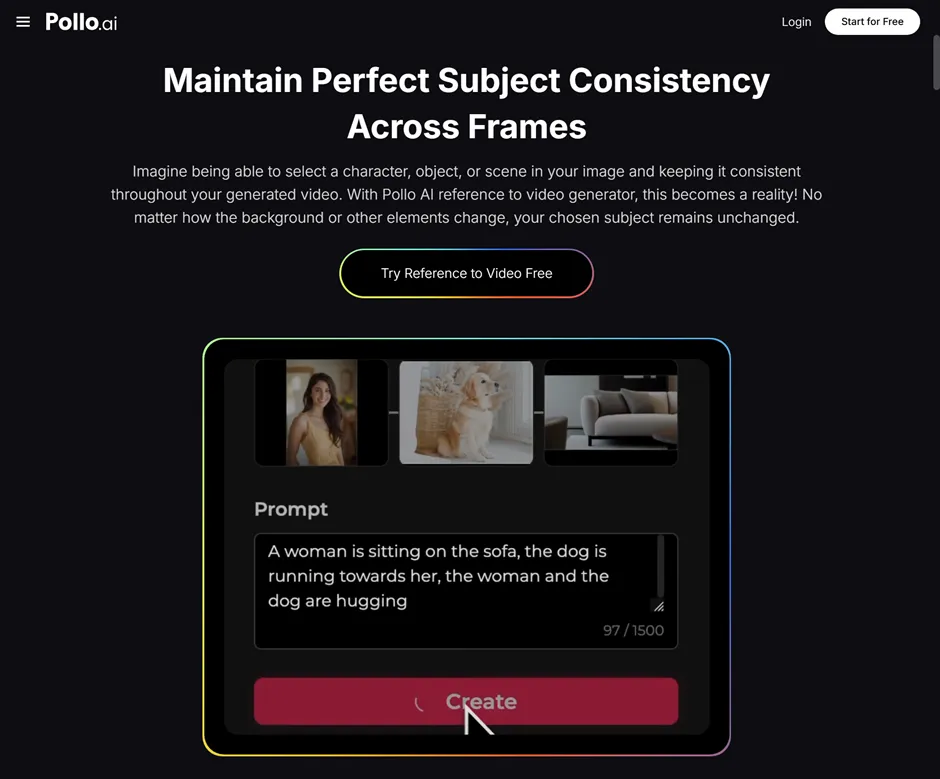
Pollo AI’s dedicated reference to video AI tool inside its Creative Studio handles this workflow across multiple generation models within a single platform. For Indian sellers who already have product photographs — even basic ones taken on a phone against a clean background — this means those existing images become the raw material for video production without requiring new photography or filming. The output is a video clip suitable for product listing pages, Instagram Reels, WhatsApp Business catalogues, or paid social campaigns.
The multi-model approach matters for e-commerce applications specifically because different product categories benefit from different visual treatments. A garment needs different motion than a kitchen appliance, which needs different treatment than a beauty product. Having access to multiple generation models within the same platform on shared credits means the right approach can be matched to each product type rather than applying one style across an entire catalog.
Pollo AI’s Commerce Studio, connected to the same platform on shared credits, extends this further — generating professional product images with custom backgrounds, lifestyle placements, and e-commerce poster formats from source product photography before the video generation step. For sellers whose existing product images are not yet at a quality level suitable for reference-based video, the image enhancement step and the video generation step both happen within the same workflow.
Bylo AI and the Broader AI Visual Toolkit
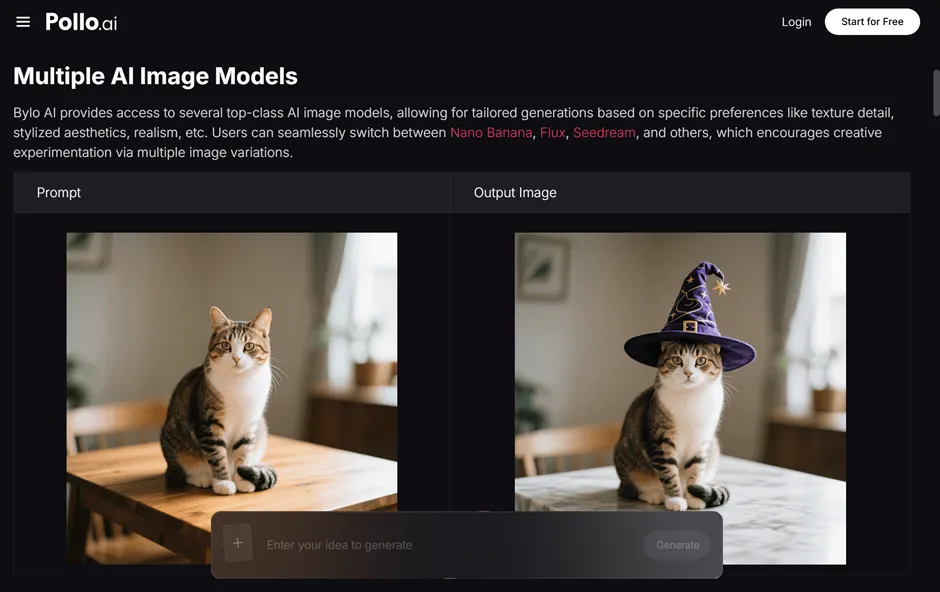
Understanding the range of AI creative tools available helps Indian sellers and small businesses make better decisions about which capabilities to add to their content production workflow. Bylo AI is an AI image generation tool with its own model approach and aesthetic range — worth exploring for businesses that need to generate original imagery from text descriptions, particularly for lifestyle or conceptual visual content that doesn’t start from an existing product photograph. For sellers building a visual content operation that spans both original image generation and product-based video creation, understanding which tool addresses which production challenge helps build a more efficient workflow.
Building a Product Video Workflow That Scales
The practical starting point for Indian e-commerce sellers is identifying the products in their catalog that would benefit most from video content — typically high-value items, top-selling SKUs, or products where customer questions about size, texture, or use context are common. These become the priority assets for reference-based video generation, and the improved conversion and customer confidence on these specific listings provides the clearest evidence of return on the workflow investment.
From there, the process is straightforward: select the strongest existing product image as the reference, generate video with appropriate motion direction specified, review for quality and platform fit, and publish. For sellers managing catalogs across multiple platforms — a product listing on Meesho, a WhatsApp Business catalogue, an Instagram shopping profile — the same generated video can be adapted across formats within a single production session rather than requiring separate production for each channel.
In 2026, the gap between Indian e-commerce sellers who use video content consistently and those who rely primarily on static images is becoming visible in conversion data. Reference-to-video AI is the most accessible path to closing that gap for sellers who already have product photographs and need video content without the overhead of traditional video production.
Also Read: Streamlining Creative Workflows and How to Generate Image-to-Image Results for Product Photos.