From Packing Bench to Doorstep: A Parcel Story with Seedance
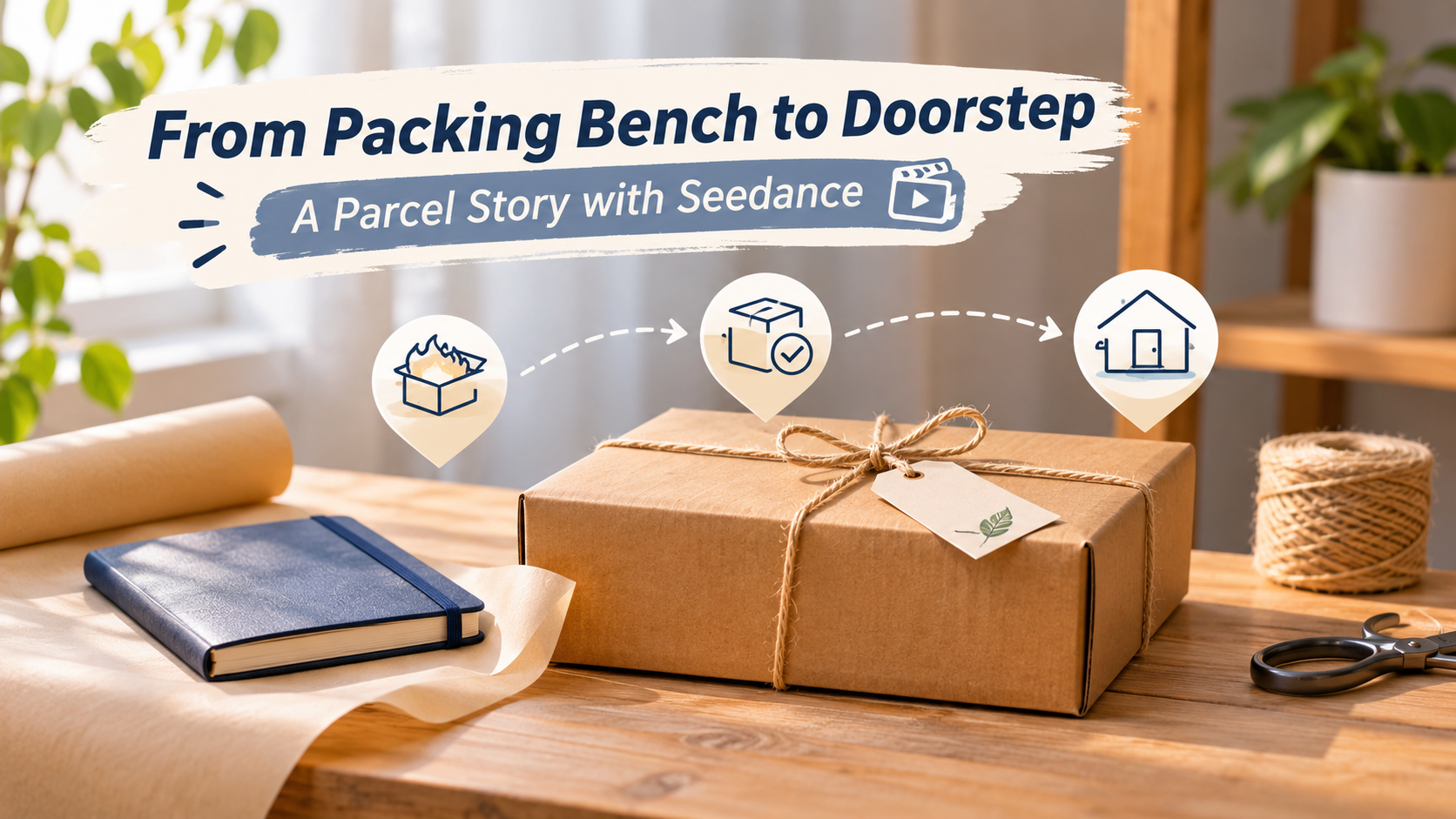
A small online shop can put great care into a parcel without showing customers any of that work. I would make a short video around one simple shipment: a notebook wrapped in paper, placed in a box, and prepared for collection. The idea would be to show care and anticipation, not to invent a courier’s actual route or promise a delivery time.
The source material would come from a staged packing session using the shop’s own products. I would photograph the notebook, the open box, and the sealed parcel on the same bench. A blank demonstration label would replace any real address. That keeps the visual exercise focused on the object rather than exposing a customer’s information.
The first scene would be close enough to show the texture of the wrapping paper. A corner of the sheet could lift slightly in the air, while the notebook remains still. I would avoid beginning with a map or a fast-moving delivery van, because the story starts with the shop’s hands-on preparation rather than an imagined logistics network.
After those reference photographs are ready, Seedance would help me explore a few controlled movements around the parcel. The AI video model can generate motion from an image and a scene description. For this project, I would keep its role to visual concept footage, with the real packing steps recorded separately whenever an exact procedure needs to be shown.
Make the parcel recognizable in every scene
I would choose one box size, one paper color, and one ribbon or strip of tape for the entire sequence. Those details create continuity when the video cuts from a close view to a wider shot. If the parcel changes from brown cardboard to a glossy white package halfway through, the viewer may stop following it as the same object.
The reference photographs would be taken under consistent light. A window to the left of the bench could provide a soft highlight across the paper, while a plain wall keeps the background quiet. I would leave enough space around the box for a vertical crop, since a parcel video is likely to be watched on a phone.
The first Seedance brief would name the materials plainly. “A closed notebook resting on cream wrapping paper on a wooden packing bench. The edge of the paper lifts slightly and settles. Keep the notebook and surrounding objects fixed. Soft daylight from the left, locked camera, no hands or new text.” This gives the shot one action and a stable subject.
Separate atmosphere from instruction
A generated shot of paper moving can suggest the care of a packing space, but it should not be mistaken for a demonstration of protective packaging. If the video needs to explain how the notebook is secured, I would film that step directly. The generated material would serve as an opening or transition, while the real footage carries the practical detail.
I would cut from the paper scene to an actual close view of the notebook being placed into its prepared box. This is where the shop can show its own process accurately. The framing would stay tight enough to avoid unrelated clutter, but wide enough that viewers can understand the position of the product and protective material.
The Seedance clip and the recorded footage would need a shared pace. If the generated paper drifts slowly while the hands move abruptly in the next shot, I would adjust the edit rather than force an artificial slow-motion effect onto every action. A brief pause before the cut can make the two sources feel like parts of the same sequence.
Give the sealed box a clear next step
For the sealed parcel, I would choose a photograph showing the completed box near the edge of the bench. The demonstration label would remain blank or use obviously fictional information added outside the generation process. I would not ask a model to create a believable tracking number, carrier label, or customer address.
This Seedance shot could move a little closer to the parcel, ending with the box occupying most of the frame. The motion would suggest that preparation is finished and the object is ready to leave. No vehicle needs to appear, and no fictional scan event needs to be created. The next stage can be communicated through a verified caption supplied by the shop.
A common visual problem would be tape changing position during the camera move. I would compare the clip with the source image and shorten the move if necessary. If the seal still drifts, a fixed camera with subtle changes in light may work better. The box’s identity matters more than an ambitious camera path.
Show delivery as an idea, not a false record
For the closing scene, I would stage a simple doorstep image with the same parcel in a generic, authorized setting. It would be presented as illustrative footage, not evidence that a real order has arrived. The scene could show the box beside a plain door with no house number or personal belongings.
I would keep this final Seedance movement minimal: a slow approach toward the parcel, with a small change in nearby leaves or light. A person opening the door is not necessary to complete the visual story. The parcel’s movement from bench to threshold already gives the viewer a beginning and an ending.
The caption could say “Prepared with care” or another statement the business can support. It should not say “Delivered today” unless the footage is actually tied to a verified delivery. A product video can create anticipation without pretending to be a tracking update or a guarantee about a courier’s performance.
Build the rough cut around the customer’s attention
I would assemble the sequence in four parts: paper texture, real packing, sealed box, and illustrative arrival. Each part would do a different job. The opening attracts attention, the packing footage shows the business’s actual work, the sealed parcel marks completion, and the final scene gives the story somewhere to end.
Sound could make the sequence more tangible. I would record the rustle of paper and the sound of the box being closed during the staged session, then place those sounds carefully in the edit. A quiet music bed might support the rhythm, but the ordinary packing sounds could be enough on their own.
The Seedance material would be reviewed alongside the real footage before color adjustments are finalized. I would match brightness and warmth gently, avoiding a heavy filter that hides the product’s actual color. If the generated scene looks too glossy for the shop’s workspace, I would simplify the lighting brief rather than make the real footage look less honest.
Leave room for useful information
The final frame would hold long enough for the shop name and a concise message. Any tracking instructions would be added as verified text, separate from the illustrative story. The viewer should be able to distinguish a promotional sequence from information about their own order.
For mobile viewing, I would check that the notebook and box remain recognizable after cropping. A wide shot that leaves the parcel tiny in the center may need a different source image. I would also prepare a still cover frame so the video makes sense before playback begins.
The finished concept would be a small account of preparation and anticipation. Seedance could supply the controlled motion around the parcel, while direct filming preserves the parts that need to be exact. The strongest version would make the shop’s care visible without inventing a journey that no camera actually followed.